|
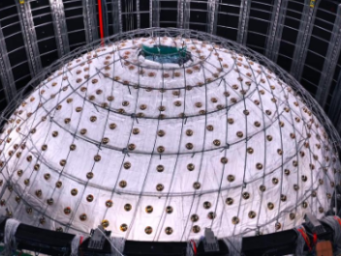
Large-scale Facilities Boost Research on Cultural Relics In recent years, the integration of large-scale scientific facilities with cultural relics research has opened new frontiers for preserving, studying, and interpreting human heritage. These advanced infrastructures—ranging from high-energy imaging systems to big data platforms—are revolutionizing how archaeologists, conservators, and historians explore the past, offering unprecedented precision and depth. Below is an in-depth look at their roles, applications, and impacts. 1. High-Resolution Imaging Facilities: Unveiling Hidden Details One of the most transformative contributions of large-scale facilities lies in non-destructive imaging, which allows researchers to examine cultural relics without altering their physical state. Synchrotron Radiation Facilities: These powerful light sources (e.g., the European Synchrotron Radiation Facility in France, or China’s Shanghai Synchrotron Radiation Facility) generate X-rays and infrared radiation with exceptional intensity. They can penetrate layers of ancient artifacts to reveal internal structures: - For painted murals (e.g., those in the Mogao Grottoes, China), synchrotron-based X-ray fluorescence (XRF) maps trace the distribution of pigments like cinnabar (mercury sulfide) or lapis lazuli, shedding light on artistic techniques and trade routes of the time. - In mummy studies, synchrotron CT scans create 3D models of bones, textiles, and even preserved organs, helping identify diseases, burial customs, or geographical origins without unwrapping. 3D Laser Scanning and Photogrammetry Platforms: Large-scale 3D modeling facilities (e.g., the CyArk project’s global scanning network) digitize entire archaeological sites or massive artifacts (e.g., stone statues, temple reliefs) with sub-millimeter accuracy. These models enable: - Virtual restoration of damaged relics (e.g., reconstructing fragmented statues from Pompeii). - Remote collaboration among international teams, who can analyze details via digital replicas. 2. Material Analysis Facilities: Decoding the Composition of the Past Understanding the materials of cultural relics—from pottery clays to metal alloys—provides critical clues about ancient technologies, resource trade, and social systems. Large-scale analytical facilities are pivotal here: Mass Spectrometry and Chromatography Centers: Equipped with high-resolution instruments (e.g., Fourier-transform ion cyclotron resonance mass spectrometers), these facilities analyze organic residues on artifacts: - Residues in ancient pottery jars can reveal whether they stored wine, milk, or oils, offering insights into diet and agriculture (e.g., studies on Neolithic Chinese pottery showed early rice wine production). - Cosmic-ray muon imaging facilities (e.g., Japan’s Muon Radiography Facility) even detect hidden chambers in pyramids or tombs by measuring how muons (high-energy particles) pass through structures, avoiding invasive excavation. Isotope Analysis Laboratories: By measuring isotopes (e.g., oxygen, strontium) in human remains or artifacts, these facilities trace origins: - Strontium isotopes in teeth enamel can determine where a person grew up, helping map migration patterns (e.g., identifying foreign rulers in ancient Egyptian tombs). 3. Big Data and AI Platforms: Connecting Fragments of History Cultural relics research generates vast amounts of data—from excavation records to imaging datasets. Large-scale data facilities and AI tools are turning this information into actionable knowledge: Global Cultural Heritage Databases: Projects like Europe’s ARIADNEplus or China’s Digital Library of Ancient Chinese Texts aggregate data from museums, excavations, and archives. AI algorithms can: - Match fragmented artifacts (e.g., shards of Greek pottery) by pattern recognition, reconstructing complete vessels. - Analyze ancient texts (e.g., cuneiform tablets, oracle bones) using natural language processing, uncovering lost narratives or administrative systems. Simulation Facilities: Supercomputing centers (e.g., the U.S. National Science Foundation’s XSEDE) model ancient environments or construction processes: - Simulating wind patterns and erosion to predict how climate change might affect outdoor relics (e.g., the Great Sphinx) helps design preservation strategies. - Replicating the building techniques of Stonehenge or the Great Wall using physics-based models clarifies how these megastructures were erected with limited technology. 4. Preservation and Restoration: Extending the Life of Relics Large-scale facilities also play a key role in protecting fragile relics from decay: Controlled Environment Facilities: Climate-controlled chambers (e.g., those at the Louvre’s conservation labs) simulate ancient environmental conditions to test how materials react to humidity, temperature, or light, informing storage and display protocols. Nanotechnology Labs: Advanced facilities develop nano-materials for restoration—for example, using nanoparticles to consolidate flaking murals or remove harmful deposits from metal artifacts without damaging the original surface. Challenges and Future Directions While large-scale facilities offer immense potential, they face challenges: high operational costs, the need for interdisciplinary expertise (combining archaeology with physics, computer science, etc.), and ethical debates over digitization (e.g., ownership of digital replicas). Looking ahead, emerging technologies like quantum sensing (for ultra-precise dating) and immersive virtual reality (for public engagement) will further integrate with these facilities, making cultural relics research more accessible and impactful. In essence, large-scale facilities are not just tools—they are bridges between science and history, enabling us to decode the past with unprecedented clarity and preserve it for future generations.
|
|
 |周边二手车|手机版|标签|xml|txt|新闻魔笔科技XinWen.MoBi - 海量语音新闻!
( 粤ICP备2024355322号-1|
|周边二手车|手机版|标签|xml|txt|新闻魔笔科技XinWen.MoBi - 海量语音新闻!
( 粤ICP备2024355322号-1| 粤公网安备44090202001230号 )|网站地图