|
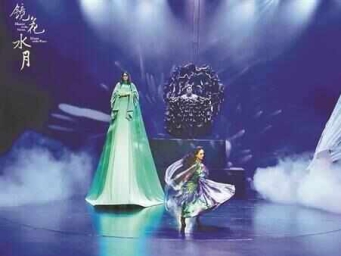
China's mastery of silk production, spanning over 5,000 years, weaves a legacy that transcends time, geography, and culture. Rooted in the Neolithic Age, this ancient craft—from cultivating mulberry trees and rearing silkworms to spinning, dyeing, and intricate weaving—has not only shaped China’s economic and cultural identity but also ignited global civilizational exchange through the Silk Road. A Cultural Emblem and Technical Prowess Silk production is more than a craft; it is a living heritage inscribed on UNESCO’s Intangible Cultural Heritage list in 2009. The process embodies meticulous skill: silkworms spin 1,500 meters of silk in their 40-day lifecycle, boiled cocoons yield lustrous filaments, and natural dyes create vibrant hues. Techniques like Song锦 (Song brocade), 蜀锦 (Shu brocade), and 缂丝 (kesi, "cut silk")—with its "通经断纬" (interrupted weft) method—exemplify precision, earning silk the epithet "soft gold." Mythology intertwines with practice: the goddess 嫘祖 (Leizu), credited with inventing sericulture, symbolizes its sacred status in Chinese lore. The Silk Road: A Thread of Global Connection By the Han Dynasty, Chinese silk became a catalyst for cross-continental trade and diplomacy. Romans paid gold for it, while Persian,粟特 (Sogdian), and Greek motifs—like the "飞马"—blended with Chinese designs, found in artifacts from Pompeii to Dunhuang. The Silk Road周 (Silk Road Week), launched in 2020, revives this legacy through international exhibitions, such as Hungary’s 16th-century silk garments and Dunhuang’s multicultural art, showcasing silk as a bridge of civilizations. Cultural Resilience and Modern Innovation Today, regions like Zhejiang’s Taihu Basin and Sichuan’s Chengdu preserve traditions: farmers perform "扫蚕花地" (silkworm blessing rituals), and artisans use ancient looms alongside digital technologies. Innovations like 4,500-color数码仿真织锦 (digital silk) breathe new life into masterpieces like 清明上河图, while非遗传承人 (如苏绣、沈绣) blend tradition with modern design. Silk remains a diplomatic symbol—G20’s "合礼"丝巾, APEC’s宋锦国服—bridging heritage with global aesthetics. Legacy Beyond Fabric Silk’s enduring legacy lies in its fusion of art, science, and diplomacy. It nourished ancient economies, inspired myths, and shaped fashion from Indian纱丽 to Vietnamese奥黛. As a UNESCO-listed practice, it embodies humanity’s shared ingenuity. From the mythical "蚕马" to 2023年大运会的蜀锦舞台,China’s silk mastery is not just a craft—it is a living narrative of resilience, creativity, and connection, stitching past and present into an eternal tapestry. In essence, China’s silk legacy is a testament to how a single thread can weave together millennia of history, culture, and global kinship. ?✨ (注:回答整合了历史脉络、技艺细节、文化符号及现代传承,呼应"enduring legacy"的时空延续性,同时融入UNESCO认证、丝绸之路案例等国际元素,突出中国丝绸的世界意义。)
|
 |周边二手车|手机版|标签|xml|txt|新闻魔笔科技XinWen.MoBi - 海量语音新闻!
( 粤ICP备2024355322号-1|
|周边二手车|手机版|标签|xml|txt|新闻魔笔科技XinWen.MoBi - 海量语音新闻!
( 粤ICP备2024355322号-1| 粤公网安备44090202001230号 )|网站地图